
 Demo
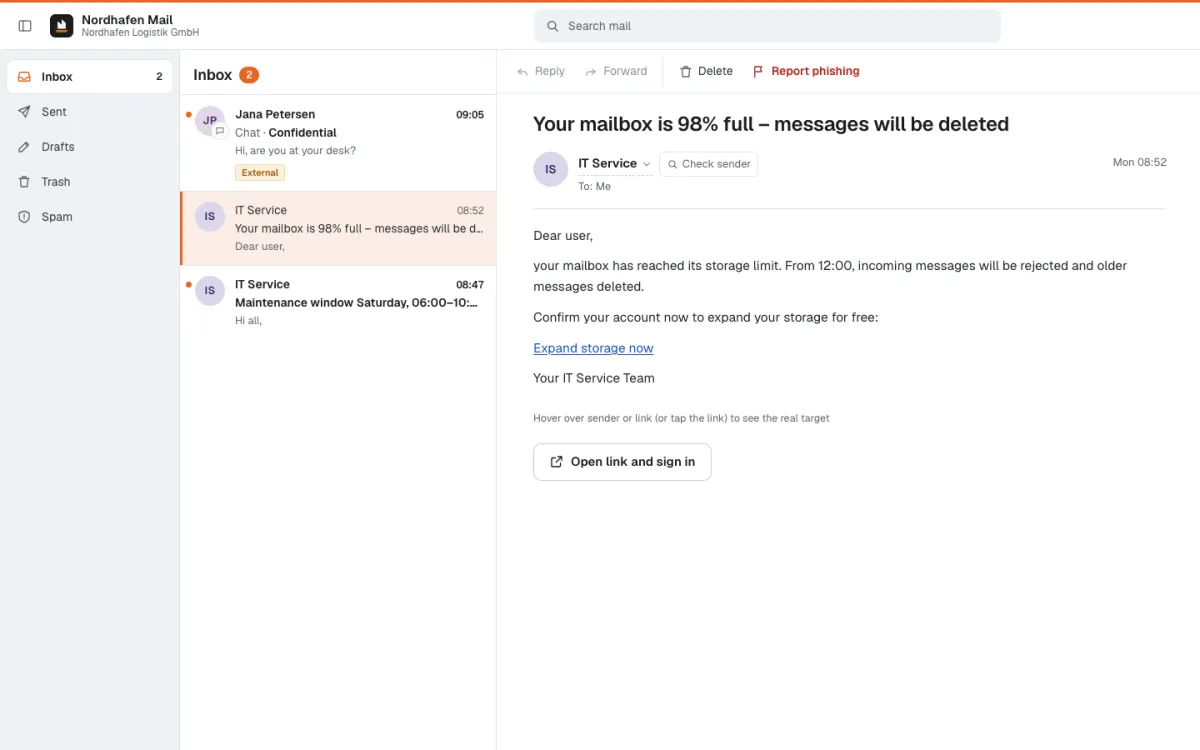
Phishing inbox
Phishing mail training
- Browser
- 10 messages
- DE and EN
For apprentices, trainees, onboarding and safety training. Your people practise real work at their own workplace. In the browser, in 3D and in VR.
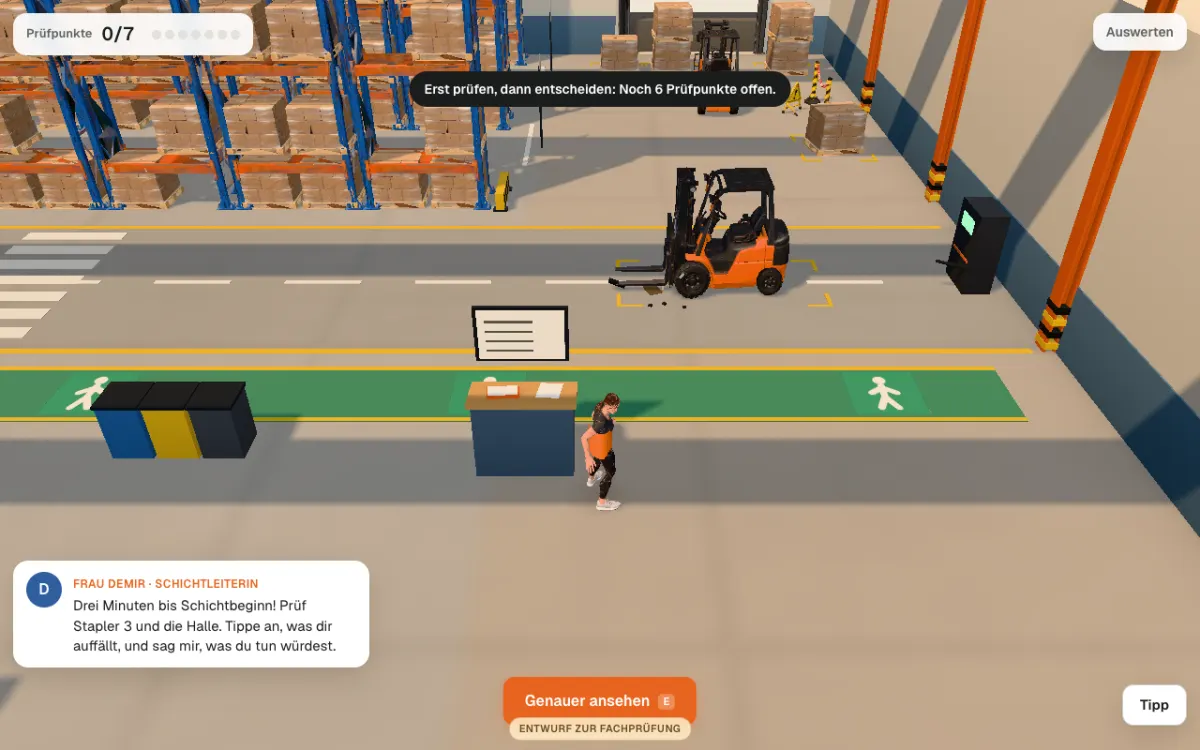
Pre-shift checklist
Your checklistbecomes a 3D learning game
A fire, an angry customer, a machine fault. You learn it by doing it.
People click through and forget.
Often months of work per module.
You send PDF, slides or a SCORM package. You get a learning game as a link or embedded. No platform subscription.
| Industry | Learning goal | Game | Result |
|---|---|---|---|
| LogisticsWarehouse | Forklift safety before the first shift. Your site, your checklist. |
Pre-shift check | New hires practise the pre-shift check. Mistakes stay private. Completion is visible. |
| RetailFirst shift | Practise rush hour before new staff work the till alone. Your store layout, your rules. |
First shift | New staff practise before day one. Mistakes stay private. Completion is visible. |
| IndustryMechatronics apprentices | Find faults safely before touching real machines. A learning room with your machine. |
Mechatronics lab | Practise in the game first. Then do it with the trainer. |
Example scenarios with fictional companies.
Why a game? You act, you make mistakes safely, you see what happens, you try again.
Your goals, your content, your people. Then we pick or design the game: ready-made or custom.
A first playable draft in about 10 working days. You test it.
Pilot with your team: we measure what sticks. Then roll out and update content anytime.
Ready-made learning games from €3,000 A pilot has a fixed scope. We name the price once we see your material. All prices net, plus VAT.
Game studios usually need 3 to 5 months for custom projects. Vendor example: Game-Ace, accessed 31.10.2026 (opens in a new tab)
You can play our demos today. All companies and people in them are fictional.
DemoPhishing mail training
 Demo
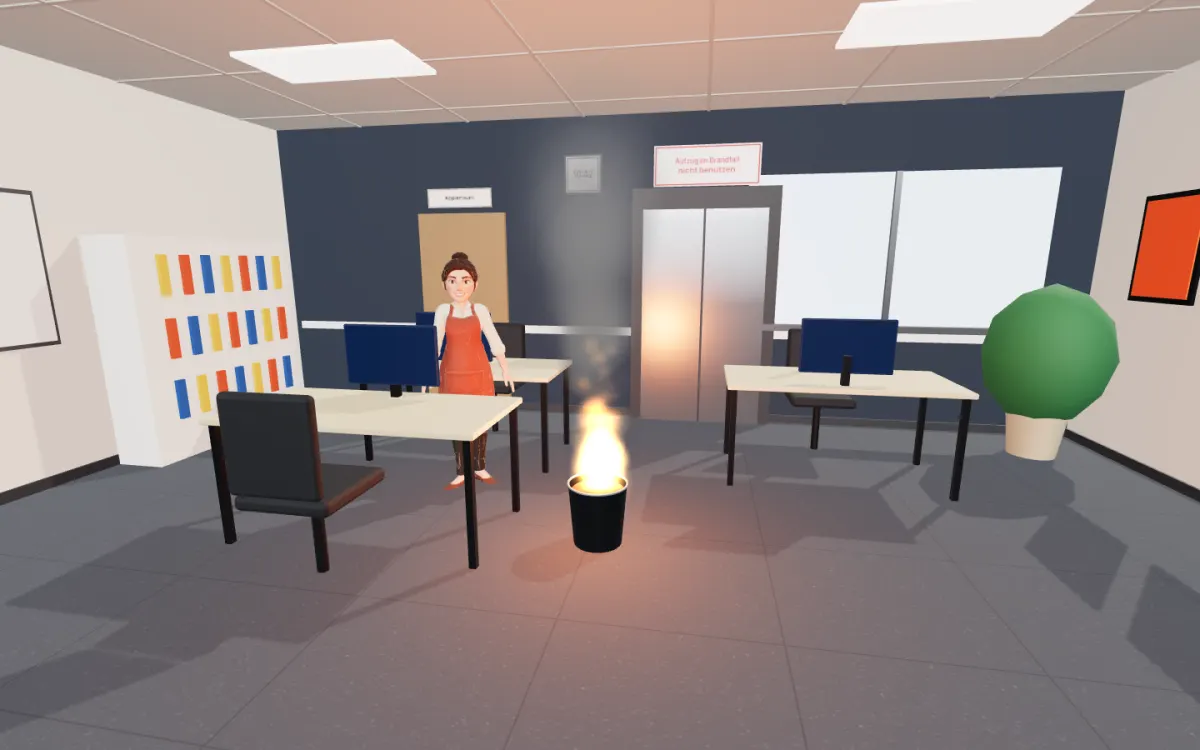
VR fire safety training
Plus learning games for data protection, customer service, onboarding, AI literacy, languages, law cases, conversations and pitches.
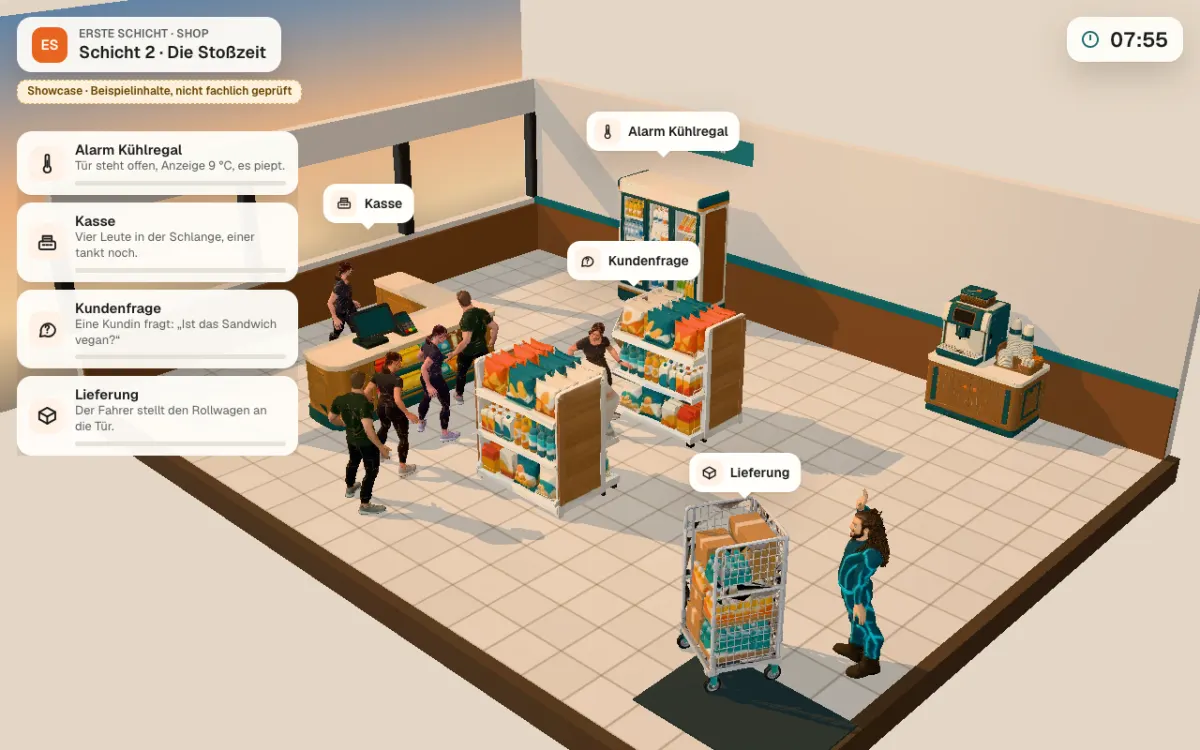
First shift in retail3D
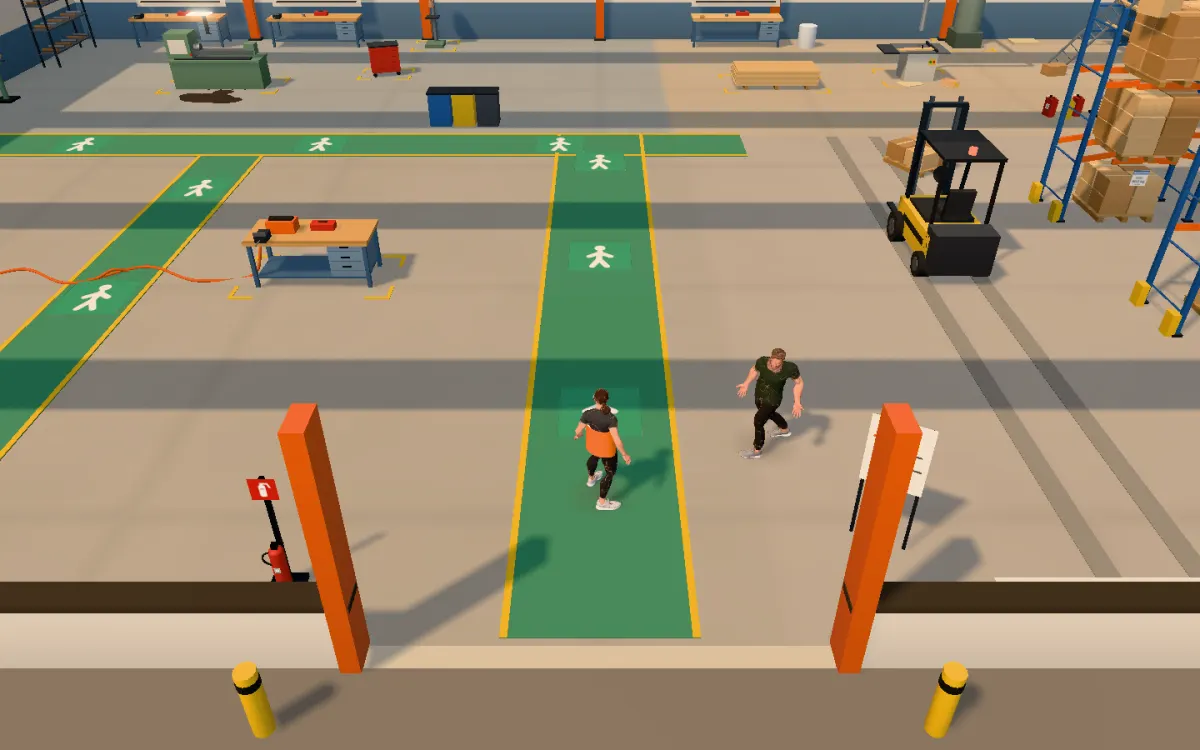
Warehouse and forklift safety3D
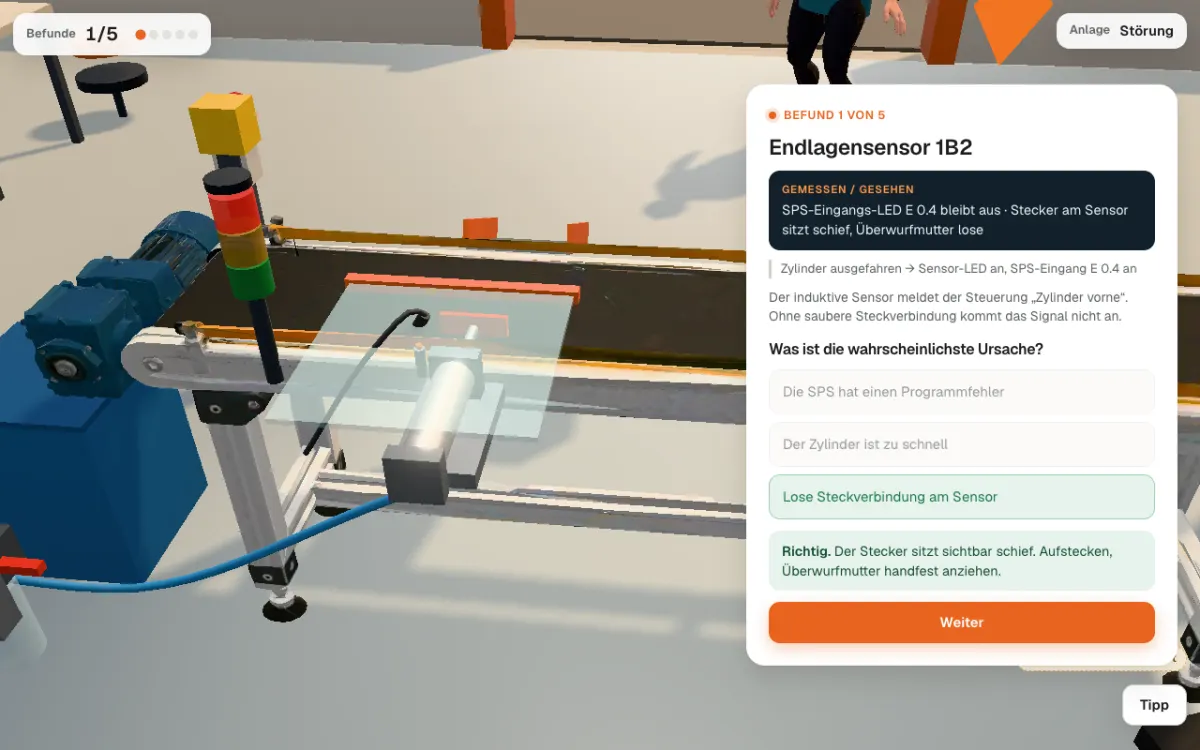
Mechatronics lab for apprentices3D
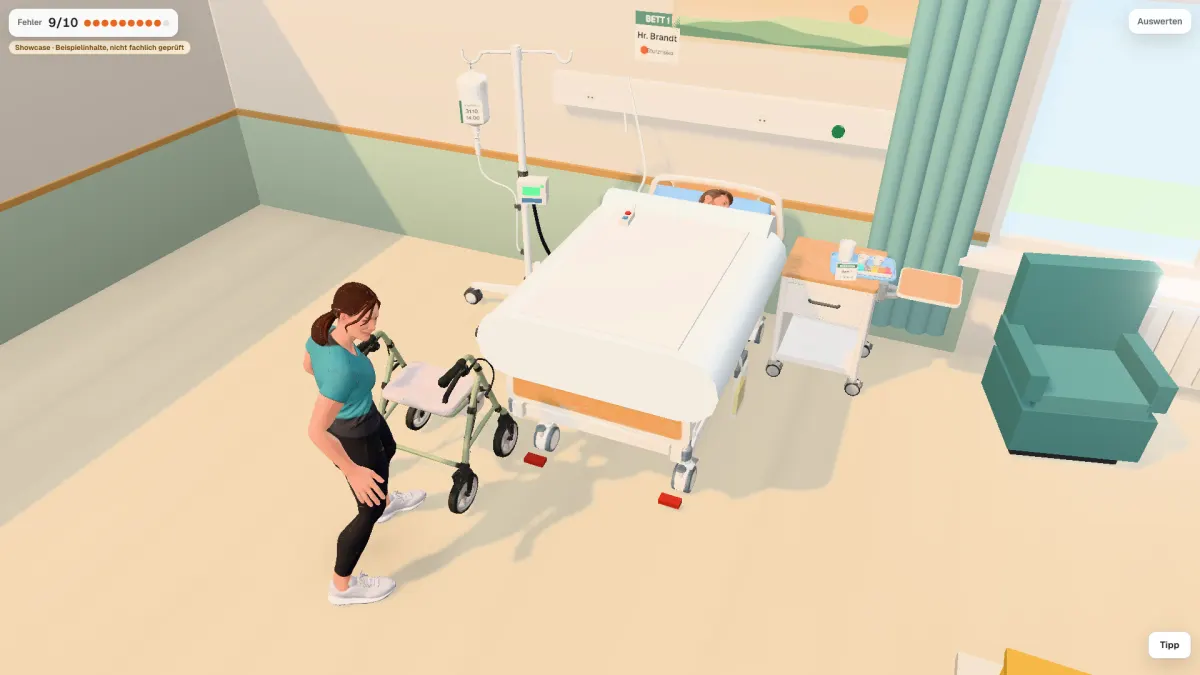
Room of errors for care staff3D
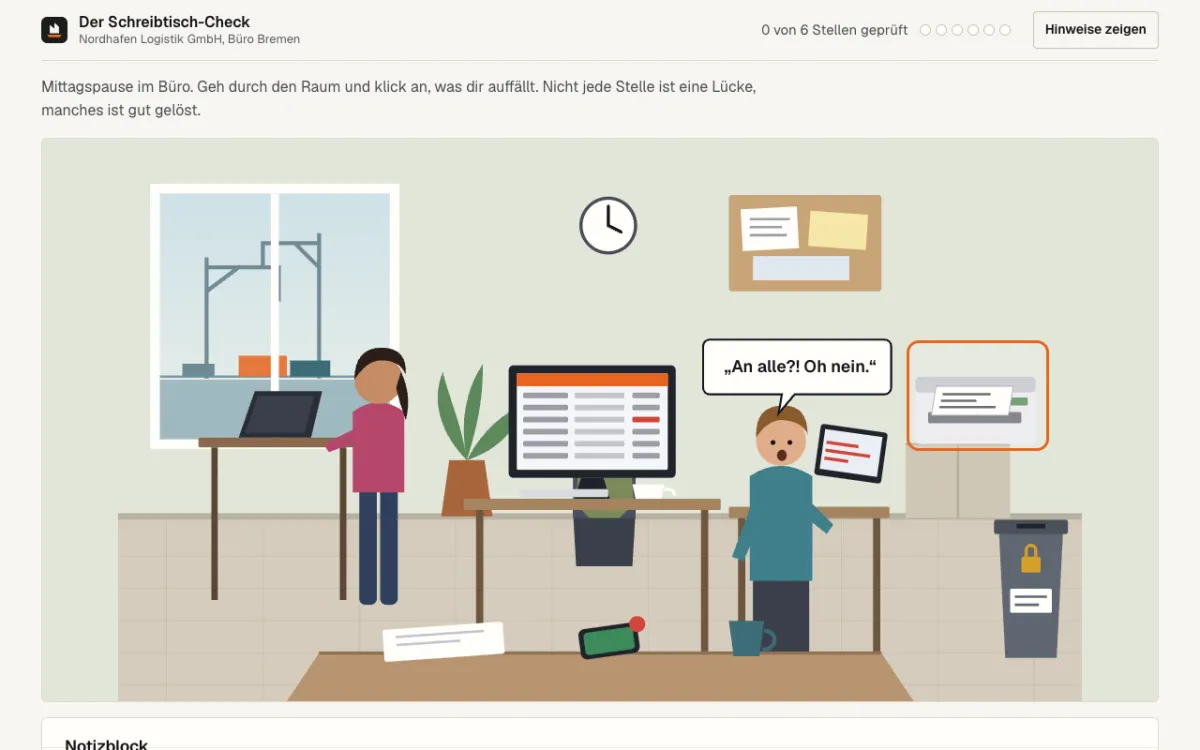
Data protection desk check2D
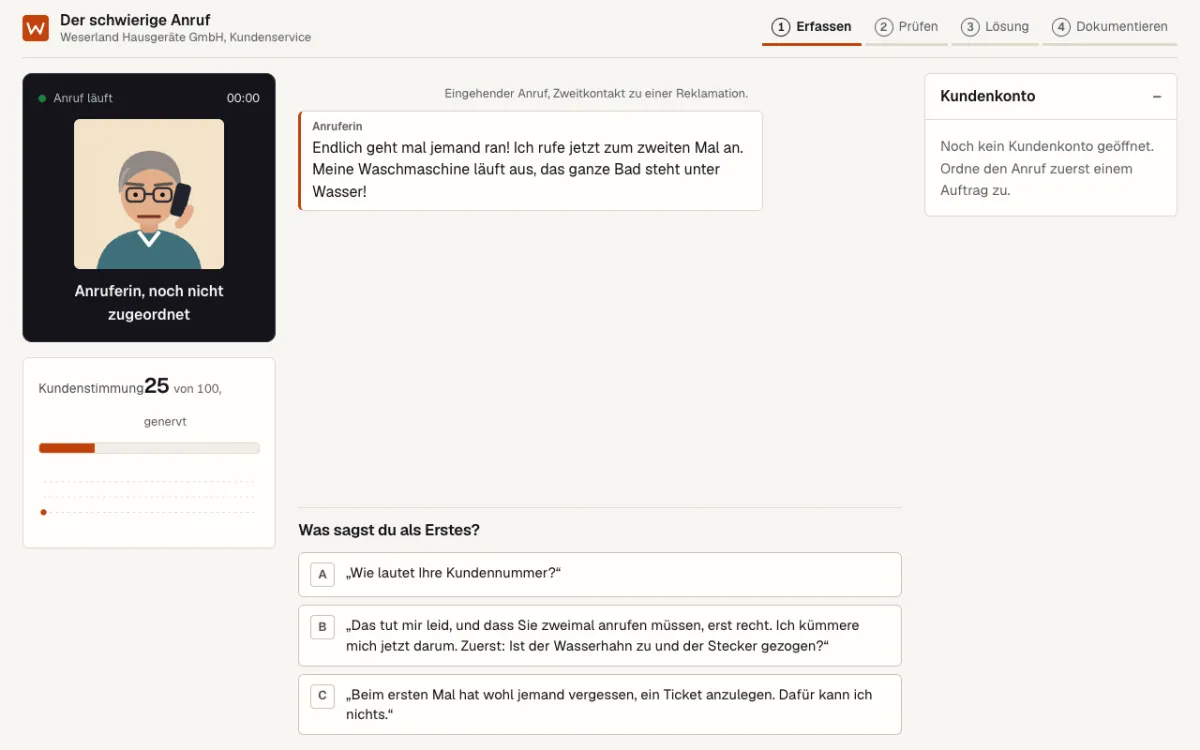
Difficult customer call2D
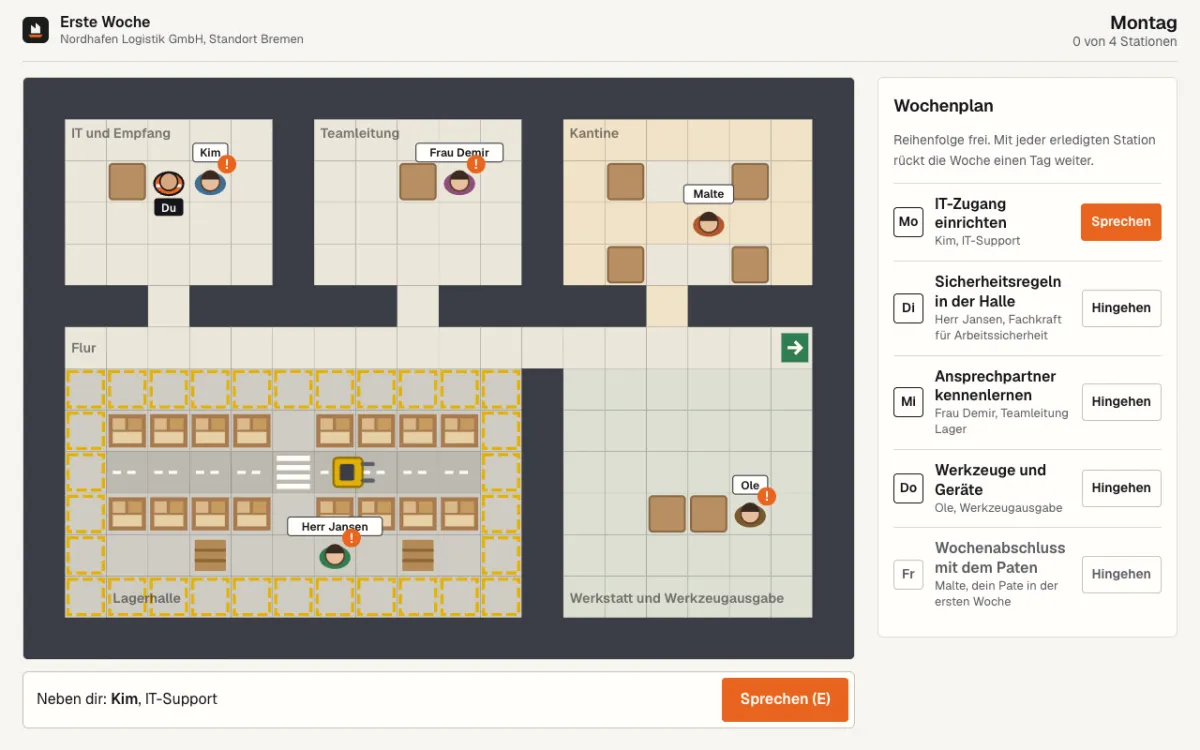
Onboarding week2D
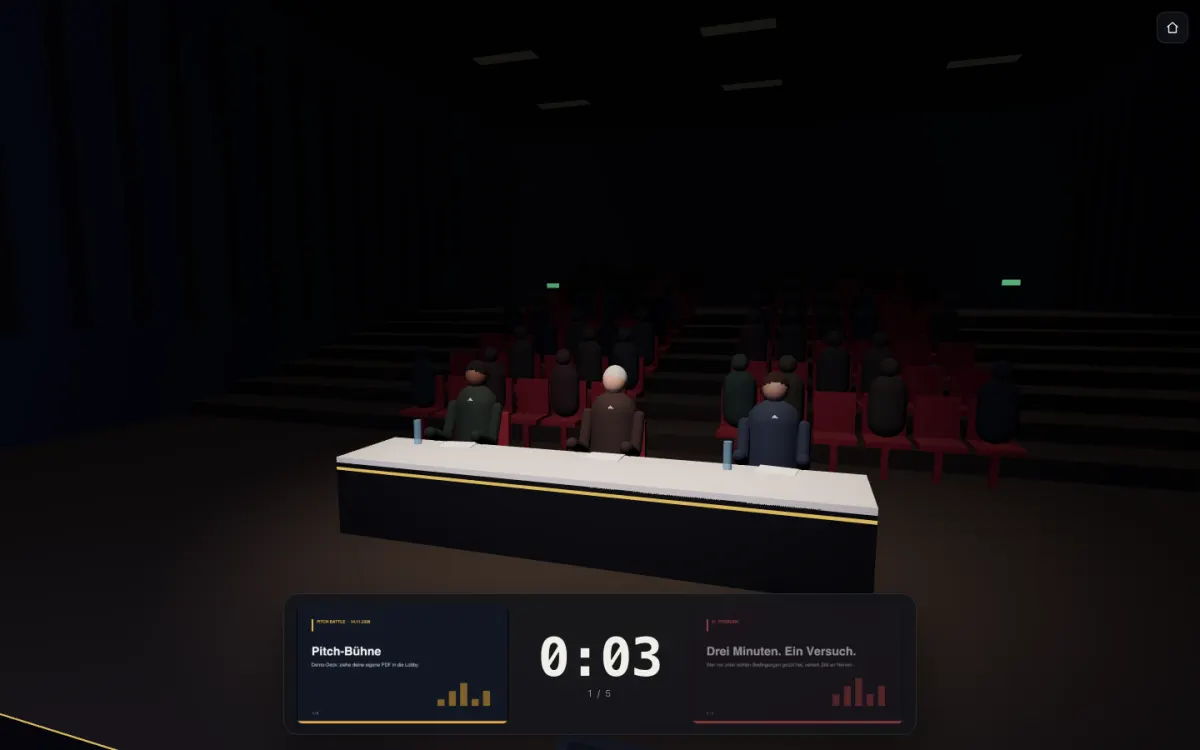
3D pitch stage trainer3D

Founder, Creaiter Studio
Software developer since 2017 (Hermes Germany, Edeka Digital). Homework.ai: more than 100,000 downloads. We also build our own learning games for languages, law cases, conversations and pitches.
The material you already have: courses and slides, work processes and checklists, onboarding material, photos and floor plans of your site, manuals and safety rules or SCORM packages.
As a link or embedded, in the browser with no install. If you like, as a 3D world, in AR or in VR. No platform subscription.
A first playable draft in about 10 working days. Game studios usually need 3 to 5 months for custom projects.
Ready-made games from €3,000. The price rises with features: Basic with 2D and choices, Pro with 3D, simulation and measurement, Premium with AR/VR, AI dialogue and multiplayer. A pilot has a fixed scope, and we name the price once we see your material. All prices net, plus VAT.
No. There are three ways: we build your learning game. You use our ready-made learning games and adapt them to your site. Or you share your learning content and get your learning game from our engine.
In the pilot we measure with you what sticks. Mistakes stay private, completion is visible. Game-based learning works best with guidance, feedback and repetition.
German and English.
In the intro call we look at your goals, your content and your people. Then we pick or design the game, ready-made or custom.
Or by email: ben@creaiter.com